Your Company Already Runs on Rules. You Just Can't See Them.
April 13, 2026
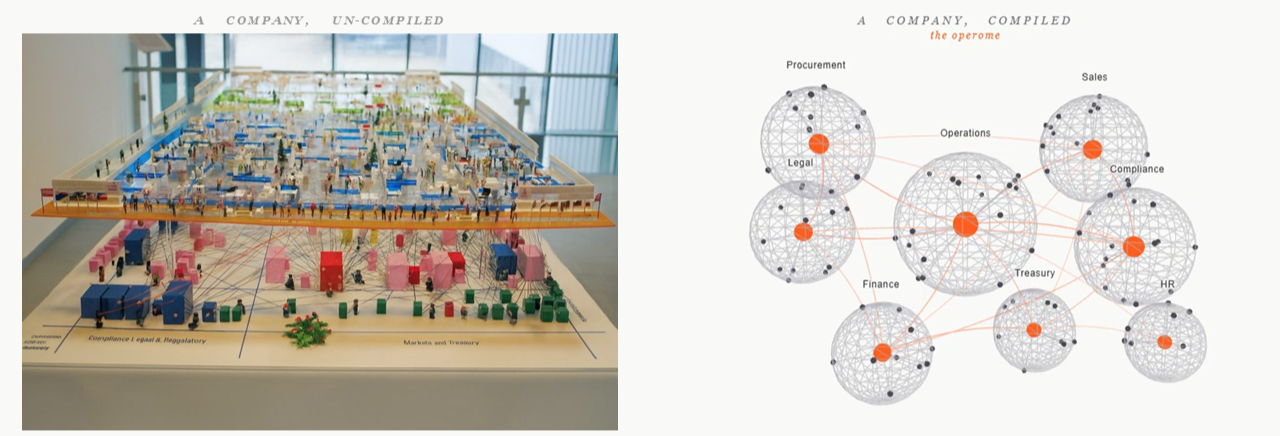
Ask your CEO a question: "Show me every rule our company operates by." The conditions, the thresholds, the constraints that govern how we hire, pay, approve, reject, escalate, and comply. - They cannot do it.
Robert Koller | SynapseLayer.ai | April 2026
Ask your CEO a question: "Show me every rule our company operates by." The conditions, the thresholds, the constraints that govern how we hire, pay, approve, reject, escalate, and comply.
They cannot do it. The rules exist. Thousands of them. Buried in contracts, embedded in policy documents, scattered across regulatory filings, living in the heads of people who have been at the company long enough to remember why something is done a certain way. But nobody has compiled them into one place.
Your company is a rule system. It runs on conditional logic every day: if the deal exceeds this threshold, route it to that committee. If the counterparty is in this jurisdiction, apply that regulatory framework. If the employee has been here less than a year, require this level of approval. Someone, at some point, wrote down the rule for each of these decisions.
But nobody compiled them into a single system. They sit in thousands of documents across dozens of departments, and every person who reads them draws a different conclusion. When someone asks "can we do this?" the answer takes days, involves five departments, and produces three conflicting interpretations. The architecture is the problem.
I have spent the last several years building a system that compiles those rules, all of them, across the entire organization, into one structured, machine-enforceable model. We call it the operome.
This pattern has played out before. Both times, the people who held the compiled system gained power that lasted centuries.
Napoleon's judges
Before 1804, France ran on scattered feudal customs, royal decrees, church canons, and local traditions that varied by province. A merchant crossing from Lyon to Paris faced different commercial rules on each side of the border. Judges in one region applied customs that judges in the next had never heard of. The king himself could not point to a single place that contained all the rules governing his own country.
Napoleon did not write new laws. His legal team, led by Jean-Étienne-Marie Portalis, took what existed and compiled it. They resolved contradictions, organized by domain, and produced a single readable code. 2,281 articles covering civil life from property to inheritance to obligations.
The judges who operated under the Code Civil did not lose authority. They gained it. For the first time, a French judge could cite a specific article and know that every other judge in the country was reading the same rule. Judges stopped arguing about which custom applied. They cited an article and moved on.
The Code Civil is still the foundation of law in over 70 countries. That is the compound effect of compilation: once you have the unified system, everything built on top of it inherits the structure.
The network effect of compiled rules
Napoleon's code was internal to France. The more consequential structural pattern came from a different direction: English common law, compiled through centuries of case law and statute, became the de facto commercial framework across a large network of jurisdictions connected by trade and administration. Whatever one thinks of the political context in which that network formed, and there is plenty to think about, the structural effect is worth naming separately from the politics. Parties in different jurisdictions could transact with each other because they knew what rules applied. A contract written in London could be enforced in Singapore, Hong Kong, or Sydney without the parties having to first agree on what law meant. The compiled system created a shared language for commerce, and the shared language enabled trade at a scale that would have been impossible if every jurisdiction had been running on its own informal customs. Commerce outside that network was structurally harder, not because the parties outside were less sophisticated, but because the absence of a shared rule framework meant every transaction had to negotiate its own terms from scratch.
The lesson is not about whose legal tradition was better. It is that compiled rule systems produce network effects that extend beyond the jurisdictions where they originated. The people who held the compiled system could transact with each other across borders. The people who did not had to build trust transaction by transaction, which meant they could not transact at scale.
The SOC 2 test
You have lived through a version of this yourself if your company has gone through SOC 2, ISO 27001, or any regulatory examination.
An auditor walks in and asks: show me your controls. Show me the rules your systems follow. Show me evidence that those rules are enforced. They do not care what your people did last quarter. They do not want to hear that "we usually handle it this way." They want the rule, the mechanism that enforces it, and the record that proves enforcement happened.
The executive who survives that audit is the one who can open a system and say: here are our controls, here is the enforcement, here is the evidence. That person built something certifiable. They did not describe behavior. They encoded rules.
This distinction matters as AI agents enter the enterprise. A growing body of practitioners and VCs are building what they call "context graphs," systems that record agent decision traces, what the agent did, what context existed, what precedent applies. Context graphs are a rich record of observed behavior.
No auditor has ever certified an organization based on observations of past behavior. They certify controls. They certify rules and enforcement mechanisms. An observation tells you what happened. A rule tells you what is allowed to happen. Auditors care about the second one.
Your company has hit the threshold
Complex systems eventually need their rules compiled. France hit that threshold in 1804. Your company hit it the moment you started deploying AI agents that make decisions on your behalf across multiple jurisdictions, business lines, and regulatory frameworks.
Those agents are making decisions right now. They follow rules scattered across your documents. Different prompt engineers interpret those rules differently. Nothing enforces them beyond hope that the training data was good enough. You are running a complex operation on uncompiled code.
The problem compounds as companies push agent deployment to individual workers. Each employee builds their own agent with their own interpretation of the rules. These agents do not coordinate. They do not follow a single rulebook. No one except the specific worker who created an agent knows what it does, whether it runs risks, whether it improves operations or slows them down. When that worker leaves, the agent becomes an orphan: still running, still making decisions, with no one who understands its logic. Meanwhile, workers burn out because they are tasked to create agents but have never been trained to encode operational rules. The result is an army of uncoordinated decision-makers, each following a different version of rules that were never compiled in the first place.
SynapseLayer reads the documents across your organization. Contracts, regulations, policies, procedures, compliance manuals, board resolutions, rules that were never written down but have been codified through years of consistent practice. It extracts the rules, conditions, variables, and constraints into a structured model. The actual operational logic, preserved with full conditional structure: "If the contract value exceeds 500,000 and the counterparty jurisdiction is restricted, require board approval."
The output is the complete operational model of your business. We proved it works by compiling the entire operational logic of European debt capital markets into approximately 7,000 variables and 35,000 business rules across 10 functional domains. €600M+ processed, 99.98% accuracy across 100,068 validations, zero compliance violations.
That was one vertical. The same methodology applies to the entire company.
The person who brings this in
The people inside the organization do not get replaced. They get promoted.
The Chief Compliance Officer today catches violations after the fact and spends months preparing for audits. With the operome, they are the person who made the organization provably compliant by design. Their board presentation changes from "we had no major findings" to "every decision our AI systems make is verified against our complete rule set, and I can prove it to any regulator who asks."
The CIO is under pressure to deploy AI and terrified of the governance gap. Agents running without deterministic controls are a career risk. The CIO who brings in SynapseLayer becomes the one who solved the trust problem. They deployed agents that execute against verified rules with full observability. That is a board-level story.
"Can we do this deal under our current policies?" Today that question takes days and five departments to answer. The COO who has the operome answers in seconds, traced back to the exact clause that governs the decision. They stop going to meetings with opinions. They go with answers.
The General Counsel's job shifts from reviewing risk after the fact to knowing that the rules are enforced before anything executes. They walk into regulatory meetings with proof instead of arguments.
Each one becomes more effective because they hold something that did not exist before: complete visibility into how their organization operates.
Napoleon's judges did not lose power when the Code Civil was published. They gained it, because they could cite a specific article and know that every other judge was reading the same rule. The executive who holds the operome gains the same thing: a single source of truth that turns scattered institutional knowledge into enforceable, auditable operational logic.
Financial statements gave companies a shared view of their financial position. The operome gives companies a shared view of their operational position. Financial statements created the modern CFO. The operome will create the executive who controls how AI agents are governed across the enterprise.
That person will be the most important hire of the next decade. Or it will be someone already in the building who saw the opportunity first.
Robert Koller is the Founder and CEO of SynapseLayer, which builds operomic infrastructure for enterprise AI. The fDesk (powered by SynapseLayer.ai) deployment has processed over 600M EUR in regulated European debt capital markets with 99.98% accuracy across 100,000+ validations and zero compliance violations.
* Left part of the header image is an image of the Rabobank architectural model courtesy of Software Improvement Group, who built it as part of their Rabobank engagement.